Advanced Driver Assistance Systems are no longer judged simply by how many safety features a vehicle has. In 2026, the focus is increasingly on how effectively these systems perform in real-world driving conditions and how naturally they work with the driver.
Australia is already seeing this shift. ANCAP’s tougher 2026–2028 testing criteria now assess vehicles across four Stages of Safety – Safe Driving, Crash Avoidance, Crash Protection and Post-Crash – with greater scrutiny of driver monitoring and how naturally lane-support systems behave. The first vehicle rated under the new criteria, the BMW iX3, received five stars in July 2026.
The six biggest ADAS trends in 2026 are:
- Tougher ANCAP testing of real-world ADAS performance
- Mandatory emergency lane keeping for new vehicles from 2028
- More sophisticated driver monitoring
- AI and sensor fusion making systems smarter
- Less intrusive, more natural assistance
- Software-defined ADAS that improves through over-the-air updates
For Australian motorists, these changes affect everything from lane assistance and driver monitoring to the windscreen-mounted cameras and sensors that modern vehicles rely on. Below, we explain each trend and what it could mean for drivers and vehicle maintenance.
6 Key ADAS Trends in 2026
These trends reflect changes in vehicle technology, safety requirements and how drivers interact with assistance systems.
1. ANCAP Is Raising the Bar for ADAS Performance
ANCAP’s 2026 safety rating changes introduce several specific testing requirements that go beyond previous protocols, including:
- More challenging AEB scenarios: Testing now includes night-time and wet-weather conditions, and a wider range of vulnerable road users, such as road workers in hi-vis clothing.
- Driver monitoring: Greater attention is given to how vehicles detect and respond to distraction, fatigue and impairment.
- Lane-support behaviour: Testing considers how systems intervene and whether drivers can comfortably override steering assistance.
- More on-road assessment: Real-world driving forms a greater part of evaluating how assistance systems behave outside controlled test environments.
Together, these changes make the new criteria considerably more demanding for vehicles seeking a five-star ANCAP safety rating. The BMW iX3, the first car rated under them, scored 71% for Safe Driving, 83% for Crash Avoidance, 86% for Crash Protection and 95% for Post-Crash.
2. Emergency Lane Keeping Will Become Mandatory in Australia
Australia has legislated ADR 107/00, making Emergency Lane Keeping Systems (ELKS) mandatory for new passenger cars, SUVs, utes and vans with a Gross Vehicle Mass (GVM) under 3.5 tonnes. The requirements will be phased in from:
- 1 March 2028: Newly introduced vehicle models
- 1 March 2029: All new vehicles covered by the rule
ELKS can warn the driver and correct the vehicle’s trajectory when it detects an unintended lane departure. However, it is not the same as every form of lane assistance technology.
So, is lane keep assist mandatory in Australia? Not yet – and when it is, the requirement will apply to emergency lane keeping specifically, not every form of lane assistance. Heavier utes and vans (3.5 tonnes GVM and over) are not covered.
3. Driver Monitoring Is Becoming More Sophisticated
Driver monitoring is moving beyond basic alerts based on steering inputs or driving time. Newer systems increasingly combine in-cabin cameras, computer vision and AI to assess whether a driver is attentive and ready to respond.
Depending on the system, this technology can analyse:
- Eye and head position to identify distraction
- Eyelid movement for signs of fatigue or drowsiness
- Driver engagement while assistance features are active
- Driver responsiveness when intervention may be required
This becomes particularly important as vehicles take on more steering, braking and acceleration tasks. In partially automated vehicles (such as Level 2 systems), the driver must remain attentive and ready to intervene.
ANCAP’s Driver State Link rewards vehicles whose crash-avoidance systems, such as forward collision warning and lane support, adjust their sensitivity based on how engaged the driver is.
4. AI and Sensor Fusion Are Making ADAS Smarter
Vehicles are getting better at combining and interpreting information from multiple sensors. Cameras, radar and other sensors increasingly work together rather than serving separate functions.
AI helps process this information by:
- Recognising objects such as vehicles, pedestrians and cyclists
- Cross-checking data collected by different sensors
- Assessing hazards based on movement, distance and road conditions
- Processing inputs quickly to support timely responses
For example, a camera may recognise a pedestrian while radar measures their distance and movement, giving automatic emergency braking more information when assessing a potential collision.
As these systems become more capable, Australian regulatory frameworks are evolving alongside them. The Australian Government and National Transport Commission continue to develop standards and regulations for increasingly automated vehicles.
5. ADAS Is Being Designed to Be Less Intrusive
As ADAS becomes more common, manufacturers face a practical problem: a safety feature offers little benefit if drivers regularly switch it off because they find it distracting or overly sensitive. ANCAP’s 2026 criteria now reward smooth, intuitive operation, so intrusive systems can cost a vehicle points.
This is pushing newer systems towards:
- Fewer false alerts through better detection of genuine risks
- Smoother interventions from steering and braking assistance
- Context-aware warnings that respond to the driving situation
- Greater personalisation where individual settings are permitted
The trend is therefore not simply adding more assistance, but making existing technology less disruptive and more likely to remain switched on.
6. ADAS Is Becoming More Software-Defined
As vehicles move towards software-defined architectures, ADAS features are becoming less fixed when a vehicle leaves the factory. Compatible vehicles can receive over-the-air (OTA) updates that change certain functions without requiring new hardware.
Depending on the vehicle and manufacturer, these updates can:
- Refine system performance and responses
- Correct software faults identified after release
- Improve existing assistance features
- Add functionality where compatible hardware is already installed
This means some new ADAS features can continue to evolve after purchase. For compatible vehicles, certain improvements no longer have to wait for the next model generation.
What Does the Future of Advanced Driver Assistance Systems Look Like?
The future of ADAS points towards vehicles taking a more anticipatory role in road safety. Instead of responding only after a risk is detected, emerging systems are being developed to recognise situations earlier and provide assistance before they become critical.
Key directions include:
- Predictive safety: Vehicles could use AI and real-time data to anticipate hazards based on traffic movement, road conditions and driver behaviour.
- Higher levels of automation: Assistance could progressively handle more driving tasks under defined conditions, reducing the level of continuous driver input required.
- Vehicle-to-everything communication: Connected vehicles could receive information from other vehicles and road infrastructure about hazards beyond the range of onboard sensors.
- Broader availability: Technologies currently associated with premium models are likely to become increasingly common across mainstream vehicles.
Together, these developments could shift ADAS from primarily reactive assistance towards earlier, more preventative intervention, changing how vehicles help drivers avoid potential collisions.
How Does ADAS Affect Windscreen Replacement?
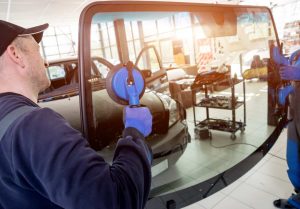
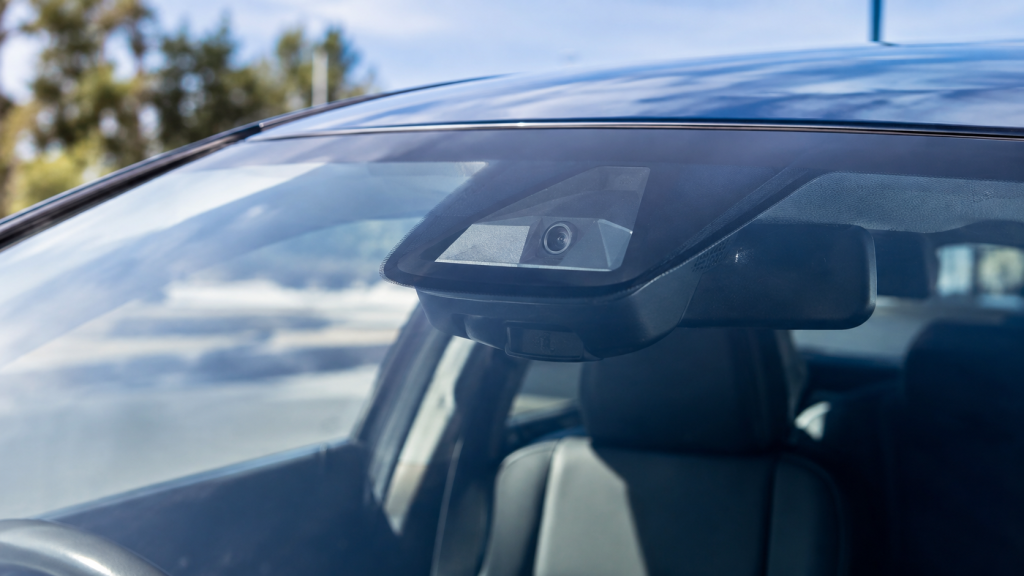
Many modern vehicles have ADAS cameras mounted behind the windscreen to monitor the road ahead and provide information to various driver-assistance functions. As a result, windscreen replacement depends on several practical considerations:
- Correct glass: The replacement windscreen must match the vehicle’s specifications and accommodate its fitted cameras and sensors.
- Camera alignment: Removing or replacing the windscreen can affect the camera’s position and its view of the road.
- Recalibration: Manufacturer procedures may require static, dynamic or combined calibration following replacement.
- Multiple functions: A single camera can support lane assistance, traffic sign recognition, automatic emergency braking and other features.
These requirements mean the replacement process needs to account for both the windscreen itself and the ADAS equipment fitted to the vehicle. Our guides explain what ADAS calibration is and which cars need ADAS calibration after windscreen replacement, and why windscreen safety matters for drivers.
Choose Albion Park Rail Windscreens & Plastics for ADAS Calibration
As ADAS brings more sophisticated cameras and safety technology into vehicles, windscreen replacement increasingly needs to account for the systems fitted around the glass. At Albion Park Rail Windscreens & Plastics, our ADAS calibration service follows manufacturer specifications, using specialised equipment to calibrate windscreen-mounted cameras and sensors.
Our service includes:
- Static, dynamic or combined calibration, depending on the vehicle
- Specialised targets and diagnostic equipment
- Post-calibration diagnostic scanning
- Windscreen replacement and calibration in one visit
We work with the most common Australian makes, including passenger cars, SUVs, utes and light commercial vehicles. Serving Wollongong, Shellharbour, Kiama, Nowra and the wider Illawarra, our team can complete both the glass replacement and the required calibration without a separate dealership appointment.
Call 0417 683 903 or contact us to arrange your windscreen replacement and ADAS calibration, or to request a free quote. After your appointment, avoid these common windscreen aftercare mistakes.
FAQs
Do all new cars in Australia have ADAS?
Every new passenger car and light commercial vehicle now has at least some ADAS. Car-to-car autonomous emergency braking (AEB) has been required on all new light vehicles since March 2025, and car-to-pedestrian AEB since August 2026. Emergency lane keeping will follow from 2028. Other features, such as adaptive cruise control and driver monitoring, still vary between vehicles.
Is lane keep assist mandatory in Australia?
Not yet. Under ADR 107/00, emergency lane keeping becomes mandatory for newly introduced passenger cars, SUVs, utes and vans with a GVM under 3.5 tonnes from 1 March 2028, and for all applicable new vehicles from 1 March 2029. Heavier utes and vans (3.5 tonnes GVM and over) are not covered.
Will ANCAP’s 2026 changes affect existing vehicle safety ratings?
No. The ANCAP 2026 safety rating changes apply to vehicles assessed under the new criteria. Existing ratings retain their original assessment and carry a date stamp showing the year tested.
Can a damaged windscreen affect ADAS cameras?
Potentially. Damage within or near a camera’s viewing area can interfere with visibility, so the windscreen and affected systems should be professionally assessed. Small chips outside the camera’s field of view can often be fixed with a chip repair rather than a replacement.
Do ADAS systems require regular calibration?
Not routinely. Calibration is generally required after specific work or changes that affect sensors or cameras, such as windscreen replacement, certain repairs or wheel alignment, depending on manufacturer requirements.
Will ADAS make fully autonomous cars possible?
ADAS is helping develop technologies needed for greater vehicle automation, but current driver-assistance systems still differ significantly from fully autonomous driving and generally require driver involvement.