What Is Windscreen Safety and Why Does It Matter for Drivers?
Table of Contents
Many drivers think a windscreen is simply a piece of glass that keeps out wind, rain, and insects. It is one of the most important safety components of any vehicle.
From preventing roof collapse during a rollover to supporting passenger-side airbag deployment, modern windscreen safety plays a much bigger role than most people realise. Even a small, cracked windscreen or stone chip can compromise structural strength and visibility if ignored.
Understanding when to repair, replace, or recalibrate your windscreen helps keep you, your passengers, and everyone else on Australian roads safer.
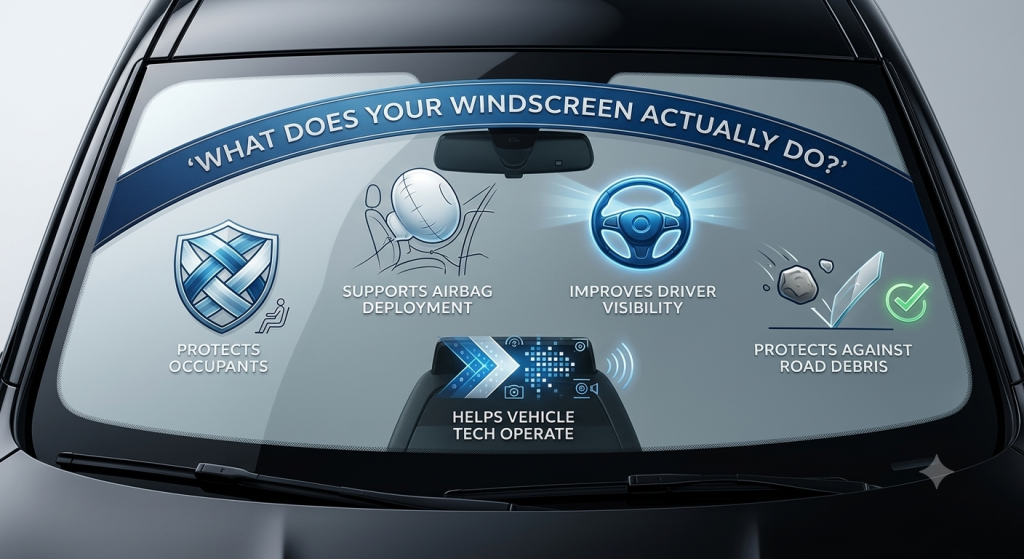
What Does Your Windscreen Actually Do?
Many people underestimate how important a windscreen is until it becomes damaged. A modern laminated windscreen contributes significantly to your vehicle’s overall safety, not just visibility.
It protects occupants during an accident
One of the biggest functions of a windscreen is maintaining the vehicle’s structural integrity.
During a collision, the windscreen helps:
Prevent occupants from being ejected
Distribute crash forces
Support the roof during rollovers
Keep airbags working correctly
It supports passenger-side airbag deployment
Most passenger airbags deploy upward before bouncing off the inside of the windscreen toward the passenger.
If the windscreen is poorly installed or structurally weakened by damage, it may fail under airbag pressure, reducing protection.
It improves driver visibility
Clear visibility is essential for safe driving.
A damaged windscreen can cause:
Glare from sunlight
Distorted vision
Water streaking
Difficulty spotting hazards
Reduced night-time visibility
Even small chips located in the driver’s line of sight can become dangerous.
It protects against road debris
Your windscreen shields you from:
Flying stones
Loose gravel
Dust
Rain
Insects
Tree branches
The laminated construction helps prevent glass from shattering into dangerous fragments.
It helps modern vehicle technology operate
Today’s vehicles often include:
Lane Keep Assist
Automatic Emergency Braking
Adaptive Cruise Control
Traffic Sign Recognition
Forward Collision Warning
Many rely on cameras mounted behind the windscreen. This makes windscreen safety even more important than ever.
Is It Safe to Drive with a Cracked Windscreen in Australia?
Usually, it is not safe, especially if the damage affects your vision or weakens the glass. A small chip can quickly become a major crack due to vibration, temperature changes, or rough roads.
Why do cracks spread?
Common reasons include:
Heat expansion
Cold mornings
Road vibrations
Speed bumps
Potholes
Closing doors forcefully
Can you legally drive with a cracked windscreen?
Australian roadworthiness rules vary slightly between states and territories, but vehicles generally must have a windscreen that:
Does not obstruct the driver’s vision
Is securely fitted
Does not significantly weaken vehicle safety
Meets applicable roadworthy standards
If the damage interferes with visibility or structural integrity, repairs or replacement are typically required before the vehicle is considered roadworthy.
Risks of ignoring a cracked windscreen
Driving with a cracked windscreen can increase the risk of:
Poor visibility
Reduced structural strength
Airbag malfunction
Larger repair costs
Complete windscreen failure
Ignoring a small chip often turns an inexpensive repair into a full replacement.
Windscreen Chip Repair vs Replacement
Many drivers wonder whether damage can simply be repaired or whether replacement is necessary. The answer depends on several factors.
When can a windscreen be repaired?
Small stone chips may be repairable if they:
Are relatively small
It has not spread into long cracks
Are not directly in the driver’s viewing area
Do not reach the edge of the glass
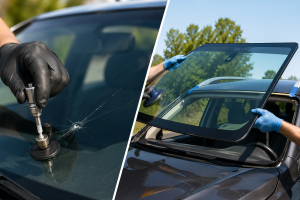
Professional resin injection restores strength while making damage less noticeable.
Better Understanding of Windscreen Chip Repair and Replacement
Repair
Replacement
Small stone chips
Large cracks
Minor bullseyes
Edge cracks
Damage not in the driver’s line of sight
Driver vision obstruction
Original glass retained
New laminated glass installed
Faster and more affordable
Required when repair isn’t safe
Why Early Repairs are Crucial
Fixing a chip early can:
Stop cracks spreading
Preserve original factory glass
Save money
Restore strength
Reduce downtime
Prompt windscreen repair in Australia is almost always more economical than waiting until replacement becomes unavoidable.
Why Modern Cars Need ADAS and Windscreen Replacement
Replacing the windscreen often involves more than installing new glass.
What is ADAS?
These systems help drivers avoid accidents using cameras, sensors, and radar.
Examples include:
Lane Departure Warning
Adaptive Cruise Control
Emergency Braking
Pedestrian Detection
Traffic Sign Recognition
Why are cameras mounted on the windscreen?
Many manufacturers position forward-facing cameras directly behind the windscreen. Even tiny changes in camera position during installation can affect accuracy.
What is windscreen ADAS camera calibration?
After replacement, technicians perform windscreen ADAS camera calibration to ensure cameras are correctly aligned. Calibration restores manufacturer specifications, so safety features operate as intended.
When is calibration required?
Calibration is commonly needed after:
Windscreen replacement
Camera removal
Front-end collision repairs
Suspension geometry changes
Skipping calibration could reduce the effectiveness of driver assistance systems.
Windscreen Safety Facts
According to the Australian Automobile Association (AAA), clear driver visibility and properly maintained vehicle safety systems are fundamental to reducing crash risks across Australian roads.
The Australasian New Car Assessment Program (ANCAP) notes that Advanced Driver Assistance Systems (ADAS) rely on correctly functioning sensors and cameras, making proper calibration after windscreen replacement essential for optimal performance.
Choose Albion Park Rail Windscreens & Plastics for Windscreen Repair in Australia
Your windscreen is a critical safety component that protects occupants, supports airbags, maintains structural integrity, and enables modern driver assistance technologies. Whether you have a small chip or a significantly cracked windscreen, addressing the problem early helps maintain windscreen safety, reduces repair costs, and keeps your vehicle roadworthy.
At Albion Park Rail Windscreens & Plastics, we provide professional windscreen repairs, quality replacements, and windscreen ADAS camera calibration to help drivers stay safe on the road. Whether you need advice on windscreen chip repair vs replacement or expert service for your vehicle, our experienced team is committed to delivering reliable workmanship and getting you back on the road with confidence.
A small cracked windscreen may seem harmless, but it can quickly worsen due to road vibrations and temperature changes. If it affects your visibility or the windscreen’s strength, it should be repaired or replaced promptly.
Windscreen chip repair vs replacement depends on the size, location, and severity of the damage. Small chips can often be repaired, while larger cracks, edge damage, or damage affecting visibility usually require replacement.
Windscreen ADAS camera calibration realigns your vehicle’s forward-facing cameras after a windscreen replacement. It is essential to ensure that safety features like lane-keeping assistance and automatic emergency braking work accurately.
Most minor windscreen repair jobs in Australia can be completed in around 30 to 60 minutes, while a full replacement may take longer, depending on the vehicle and adhesive curing time.